7 Daily Habits for Joint Comfort After 50
By Amanda Bryne10 min read
Joint comfort after 50 comes down to a handful of small things done every day, not one big fix. The seven habits that show up again and again in the advice from Mayo Clinic, Cleveland Clinic, the CDC and the National Institute on Aging are: move your joints first thing in the morning, walk most days, keep your weight in check, drink water instead of beer and soda, eat mostly plants and whole foods, protect seven to nine hours of sleep, and use heat, cold and (if you like) tart cherry on purpose rather than at random.
None of them is dramatic. That is the point. A joint that gets moved, fed, rested and not overloaded every single day tends to complain less than one that gets ignored all week and then punished on Saturday. Here is each habit, why it works, and how people actually fit it into a morning, an afternoon and an evening.
Key studies at a glance
| Study | Who took part | What they took or did | How long | What the researchers found |
|---|---|---|---|---|
|
White et al. 2014, Arthritis Care & Research PMID: 24923633 |
1,788 adults with or at risk of knee osteoarthritis, average age 67 | Daily steps measured over 7 days (observational) | Followed for 2 years | Each extra 1,000 steps a day linked with a 16 to 18 percent lower risk of new functional limitation. Under about 6,000 steps a day was the best cut-off for who developed it. |
|
Messier et al. 2005, Arthritis & Rheumatism PMID: 15986358 |
142 overweight and obese older adults with knee osteoarthritis | Diet and exercise trial, knee forces measured during walking | 18 months | Each pound of weight lost was linked with about four pounds less load on the knee per step. |
|
Messier et al. 2013 (IDEA trial), JAMA PMID: 24065013 |
454 overweight and obese adults aged 55 and up with knee osteoarthritis | Diet plus exercise, diet alone, or exercise alone | 18 months | Diet plus exercise lost 11.4 percent of body weight on average and had less pain and better function than either diet or exercise alone. |
|
McCurry et al. 2021, JAMA Internal Medicine PMID: 33616613 |
327 adults aged 60 and up with insomnia and osteoarthritis pain | Six phone sessions of cognitive behavioral therapy for insomnia vs education only | 8 weeks, followed for 12 months | Insomnia scores fell 8.1 vs 4.8 points. At 12 months 56 percent vs 26 percent were in remission. Pain improved after treatment but not at 12 months. |
|
Zhang et al. 2026, Asia Pacific Journal of Clinical Nutrition PMID: 42242852 |
4 randomized trials, 392 participants | Tart cherry vs placebo or usual diet | Varied by trial | Modest reduction in serum uric acid, with a lot of variation between studies. Evidence limited. |
|
Jäger et al. 2025, Journal of Dietary Supplements PMID: 41247121 |
10 healthy adults | 500 mg standardized tart cherry extract daily vs placebo (crossover) | 4 weeks | CRP fell from 5.91 to 4.56 mg/L and plasma urate from 7.01 to 4.39 mg/dL. Placebo did not improve. Small trial. |
Why daily beats occasional
Most joint trouble after 50 is osteoarthritis, where the cartilage (the slippery cap on the ends of your bones) and the other tissues in the joint change over time. The National Institute of Arthritis and Musculoskeletal and Skin Diseases makes a point worth repeating: this is not simple wear and tear from use. Changes in the tissue trigger the breakdown, and the process is gradual. Mayo Clinic says staying active, maintaining a healthy weight and certain treatments might slow progression and improve pain and joint function.
Stiffness is worst after rest, which is why the hands feel like wood at 6 a.m. and the knees creak after a long drive. Daily habits work because they keep the gaps between movement short, keep the load on the joint reasonable, and give the body what it needs to repair overnight.
The seven habits
1. Move every joint before breakfast
Before you reach for the phone, lie in bed and run through the body: make fists and spread the fingers, circle the wrists, bend and straighten the knees, point and flex the feet, roll the shoulders. Two minutes. Then a warm shower, and for the hands, a minute under the warm tap followed by ten slow fists. Cleveland Clinic lists applying heat to affected joints as a way to relieve osteoarthritis pain and stiffness, and MedlinePlus mentions warm baths, massage and stretching for joint pain. If stiff hands are your main problem, there is a fuller routine in morning stiffness in your hands after 50.
2. Walk most days, and lift something twice a week
The CDC recommends 150 minutes of moderate activity a week, which it notes can be split into 30 minutes on five days, plus muscle-strengthening work on at least two days that covers the major muscle groups. Cleveland Clinic says low-impact activities such as swimming, water aerobics and weight training can ease stiffness and strengthen the muscles around joints, which take load off the joint itself. A brisk walk after lunch and two short sessions a week with resistance bands or light dumbbells covers it.
The walking part has solid data behind it. In a study of 1,788 adults with or at risk of knee osteoarthritis whose steps were measured over a week, each extra 1,000 steps a day was linked with a 16 to 18 percent lower risk of developing problems with function over the next 2 years, and walking fewer than about 6,000 steps a day was the cut-off that best predicted who would. It was an observational study, so it shows a link, not proof that the walking caused the difference.
3. Keep your weight where your joints want it
Extra body weight is the risk factor people can actually do something about. Mayo Clinic explains it two ways. The obvious one: more weight means more stress on the hips and knees with every step. The less obvious one: fat tissue produces proteins that can cause harmful swelling in and around joints, which is why weight matters even for the hands. For gout, Mayo Clinic adds that carrying extra weight makes the body produce more uric acid and makes the kidneys slower to clear it.
The knee numbers are striking. In a study of 142 overweight and obese older adults with knee osteoarthritis, each pound of weight lost was linked with about four pounds less load on the knee with every step. In the 18-month IDEA trial of 454 overweight and obese adults aged 55 and up with knee osteoarthritis, the group that combined diet and exercise lost 11.4 percent of their body weight on average and had less pain and better function than people who only dieted or only exercised. Both studies were in knees, and in people who were carrying extra weight to begin with.
4. Drink water, and go easy on beer and soda
This one is less about the water and more about what it replaces. Alcohol, mainly beer, and drinks sweetened with fructose raise uric acid levels, according to Mayo Clinic, and MedlinePlus lists drinking less alcohol, especially beer, and limiting sugary beverages among the measures that help prevent gout attacks. A glass of water with each meal and one in the afternoon is an easy place to start. Keep the beer for the weekend and notice whether your big toe has an opinion about it. If it does, read why your big toe hurts at night.
5. Eat mostly plants and whole foods
No diet repairs cartilage. But the pattern of eating that the gout guidance recommends is the same pattern that helps with weight, blood pressure and blood sugar, which all sit behind joint trouble. MedlinePlus lists dairy, vegetables, nuts, legumes, fruit and whole grains as the foods to eat, and limiting red meat as the change to make. Mayo Clinic adds organ meats and purine-rich seafood such as anchovies, sardines and mussels to the list of things that raise uric acid.
6. Protect seven to nine hours of sleep
Pain and sleep feed each other. Mayo Clinic lists sleep disturbance as a complication of osteoarthritis, and anyone who has lain awake with an aching knee knows the next morning is worse. The National Institute on Aging says older adults need the same seven to nine hours as everyone else, but sleep gets lighter and more broken with age. Its tips are plain: go to bed and get up at the same time every day, have a wind-down routine such as a book or a warm bath, keep the bedroom comfortable and screen-free, exercise but not within three hours of bed, skip late caffeine, and avoid big meals and alcohol close to bedtime. If sleep is your weak spot, tart cherry has some research there too, covered in tart cherry for sleep: what the research says.
Fixing sleep can help the pain side a little too. In a trial of 327 adults aged 60 and up with insomnia and osteoarthritis pain, six short phone sessions of cognitive behavioral therapy for insomnia over 8 weeks improved insomnia scores far more than education alone, and 56 percent were still in remission a year later, against 26 percent. Pain also improved after treatment, but that difference had faded by 12 months. The sleep gains lasted, the pain gains were smaller.
7. Use heat, cold and tart cherry on purpose
The last habit is an evening routine. Heat for stiffness, cold for a joint that is puffy and sore after a long day. Cleveland Clinic lists both as ways to relieve osteoarthritis pain and stiffness and suggests asking your provider how often and how long to use them. A warm pack on the knees while you read, or a cold pack wrapped in a towel on a swollen knuckle for ten minutes, is the whole method.
Tart cherry is the optional part, and here is what the research actually shows. Tart cherries are rich in anthocyanins, the pigment that makes them red. A 2026 meta-analysis of four randomized controlled trials with 392 participants found a modest reduction in serum uric acid compared with control, with a lot of variation between studies. A small placebo-controlled trial in 10 healthy adults found that after 4 weeks on a standardized tart cherry extract, C-reactive protein (a blood marker of inflammation) fell from 5.91 to 4.56 mg/L and plasma urate fell from 7.01 to 4.39 mg/dL, while placebo did not improve. And a 2025 systematic review of tart cherry and sleep describes a 7-day crossover trial in 20 adults in which tart cherry juice concentrate raised a urinary melatonin marker and increased total sleep time and sleep efficiency. These are small trials, and none of them measured joint comfort directly.
How to start without overdoing it
Seven habits at once is a recipe for quitting by Thursday. Pick two. The morning movement routine and the daily walk are the two with the most leverage, because they make the others easier: walking helps weight and sleep, and the morning routine makes the day's first hour tolerable. Add the water swap in week two, the food changes in week three, and the evening heat-or-cold routine when you notice which joints are complaining.
Go gently on the exercise at first. A joint that has not been asked to do much for a while will be sore the day after, and that is normal. Sharp pain during movement, or swelling that appears after exercise and does not settle overnight, means back off and ask a physical therapist or your doctor to look at how you are moving.
When joint pain needs a doctor, not a habit
Habits are for the everyday ache and stiffness. They are not for the following, which need a doctor:
- A joint that is suddenly hot, red, swollen and too painful to touch, especially with a fever. Mayo Clinic says to seek care immediately, because this can be an infection.
- Sudden, intense pain in one joint with no injury, which Mayo Clinic says warrants a call to your doctor and is the classic start of gout.
- Stiffness in the mornings that lasts longer than 30 minutes, in both hands or both feet at once, along with fatigue. That pattern points to rheumatoid arthritis rather than osteoarthritis.
- Pain after a fall, a knock or a twist, a joint that looks crooked, or swelling in one leg or foot with no obvious reason.
- MedlinePlus adds: joint pain that lasts more than several days, fever without flu-like symptoms, or losing about 10 pounds without trying.
Mayo Clinic's rule of thumb for osteoarthritis is short: if joint pain or stiffness does not go away, make an appointment. A diagnosis does not take the habits off the table. It just tells you which ones matter most for you.
Where Nature Heart fits
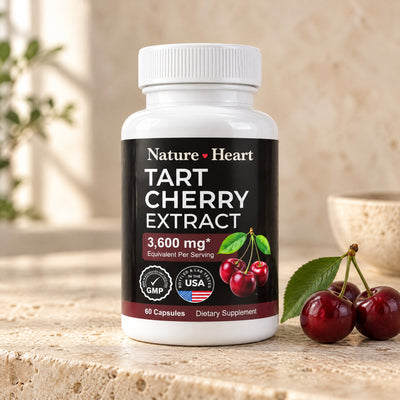
Nature Heart makes one product: Cold-Pressed Tart Cherry Extract. Two vegetable capsules a day give 3,600 mg equivalent of Montmorency tart cherry, cold-pressed rather than heat-dried and standardized for anthocyanins. One ingredient, no fillers, every batch third-party lab tested before it ships. In our October 2026 buyer survey, joint comfort was the main reason 57 percent of first-time buyers gave, and "cold pressed", "tested every batch" and "one ingredient, no fillers" were what convinced them most.
It belongs at habit seven, not habit one. The walk, the weight, the water and the sleep do most of the work. If you want to add tart cherry to that routine, a bottle is 30 days and there is a 90-day money-back guarantee if it does not earn its place.
Frequently Asked Questions
What is the single best habit for joint comfort after 50?
If you only pick one, pick daily movement. Cleveland Clinic says low-impact exercise eases stiffness and strengthens the muscles around joints, and the CDC's target of 150 minutes a week of moderate activity works out to a 30-minute walk on five days. Everything else on the list works better when you are moving.
Does losing weight help joints that do not carry weight, like hands?
It can. Mayo Clinic notes that extra weight adds stress to the hips and knees, and also that fat tissue produces proteins that can cause harmful swelling in and around joints, including ones that do not bear weight. Even modest weight loss tends to help.
Is heat or cold better for stiff joints?
Both have a place. Cleveland Clinic lists applying heat or cold to affected joints as a way to relieve osteoarthritis pain and stiffness, and suggests asking your provider how often and how long. Most people use warmth for morning stiffness and cold for a joint that is puffy and sore after a lot of use.
How much sleep do adults over 50 need?
The National Institute on Aging says older adults need the same seven to nine hours as all adults, but sleep tends to get lighter and more broken with age. A regular schedule, a wind-down routine, no late caffeine and no screens in the bedroom are its main tips.
Where does tart cherry fit into a daily routine?
Think of it as habit number seven, not habit number one. Studies on tart cherry found modest reductions in uric acid across four randomized trials, lower inflammation markers in a small 4-week trial of 10 adults, and better sleep measures in a 7-day trial of 20 adults. Take it at the same time each day and judge it after a month.
What studies have been done on walking, weight and joint pain?
In 1,788 adults with or at risk of knee osteoarthritis, each extra 1,000 steps a day was linked with a 16 to 18 percent lower risk of developing problems with function over 2 years, though that study was observational. In the 18-month IDEA trial of 454 overweight and obese adults aged 55 and up with knee osteoarthritis, the diet plus exercise group lost 11.4 percent of body weight on average and had less pain and better function than diet or exercise alone. A separate analysis found each pound lost was linked with about four pounds less load on the knee per step.
Sources
- Cleveland Clinic. Osteoarthritis: What It Is, Symptoms & Treatment. https://my.clevelandclinic.org/health/diseases/5599-osteoarthritis
- Centers for Disease Control and Prevention (2023). Adult Activity: An Overview. https://www.cdc.gov/physical-activity-basics/guidelines/adults.html
- Mayo Clinic (2025). Osteoarthritis: Symptoms and causes. https://www.mayoclinic.org/diseases-conditions/osteoarthritis/symptoms-causes/syc-20351925
- Mayo Clinic (2026). Gout: Symptoms and causes. https://www.mayoclinic.org/diseases-conditions/gout/symptoms-causes/syc-20372897
- MedlinePlus (2024). Gout. https://medlineplus.gov/ency/article/000422.htm
- MedlinePlus (2024). Joint pain. https://medlineplus.gov/ency/article/003261.htm
- National Institute on Aging (2025). Sleep and Older Adults. https://www.nia.nih.gov/health/sleep/sleep-and-older-adults
- National Institute of Arthritis and Musculoskeletal and Skin Diseases (2025). Osteoarthritis Symptoms, Causes & Risk Factors. https://www.niams.nih.gov/health-topics/osteoarthritis
- Zhang Z et al. (2026). Tart cherry intake and serum uric acid: Meta-analysis of randomized controlled trials and evidence from network pharmacology. Asia Pacific Journal of Clinical Nutrition 35(3):451-462. PMID: 42242852. https://pmc.ncbi.nlm.nih.gov/articles/PMC13236459/
- Jäger R, Purpura M, Balcombe ST, Godavarthi A, Reddy SA, Vasenina E, Tinsley GM (2025). Effects of Tart Cherry Extract Supplementation on Plasma Urate and C-Reactive Protein Levels in Healthy Adults: a Randomized Controlled Trial. J Diet Suppl. PMID: 41247121. https://www.tandfonline.com/doi/full/10.1080/19390211.2025.2589787
- Barforoush F et al. (2025). The Effect of Tart Cherry on Sleep Quality and Sleep Disorders: A Systematic Review. Food Science & Nutrition 13(9):e70923. PMID: 40964149. https://pmc.ncbi.nlm.nih.gov/articles/PMC12438961/
- White DK, Tudor-Locke C, Zhang Y, Fielding R, LaValley M, Felson DT, Gross KD, Nevitt MC, Lewis CE, Torner J, Neogi T (2014). Daily walking and the risk of incident functional limitation in knee osteoarthritis: an observational study. Arthritis Care & Research. PMID: 24923633. https://pubmed.ncbi.nlm.nih.gov/24923633/
- Messier SP, Gutekunst DJ, Davis C, DeVita P (2005). Weight loss reduces knee-joint loads in overweight and obese older adults with knee osteoarthritis. Arthritis & Rheumatism. PMID: 15986358. https://pubmed.ncbi.nlm.nih.gov/15986358/
- Messier SP, Mihalko SL, Legault C et al. (2013). Effects of intensive diet and exercise on knee joint loads, inflammation, and clinical outcomes among overweight and obese adults with knee osteoarthritis: the IDEA randomized clinical trial. JAMA. PMID: 24065013. https://pubmed.ncbi.nlm.nih.gov/24065013/
- McCurry SM, Zhu W, Von Korff M, Wellman R, Morin CM, Thakral M, Yeung K, Vitiello MV (2021). Effect of Telephone Cognitive Behavioral Therapy for Insomnia in Older Adults With Osteoarthritis Pain: A Randomized Clinical Trial. JAMA Internal Medicine. PMID: 33616613. https://pubmed.ncbi.nlm.nih.gov/33616613/