Morning Stiffness in Your Hands After 50: What Helps
By Amanda Bryne9 min read
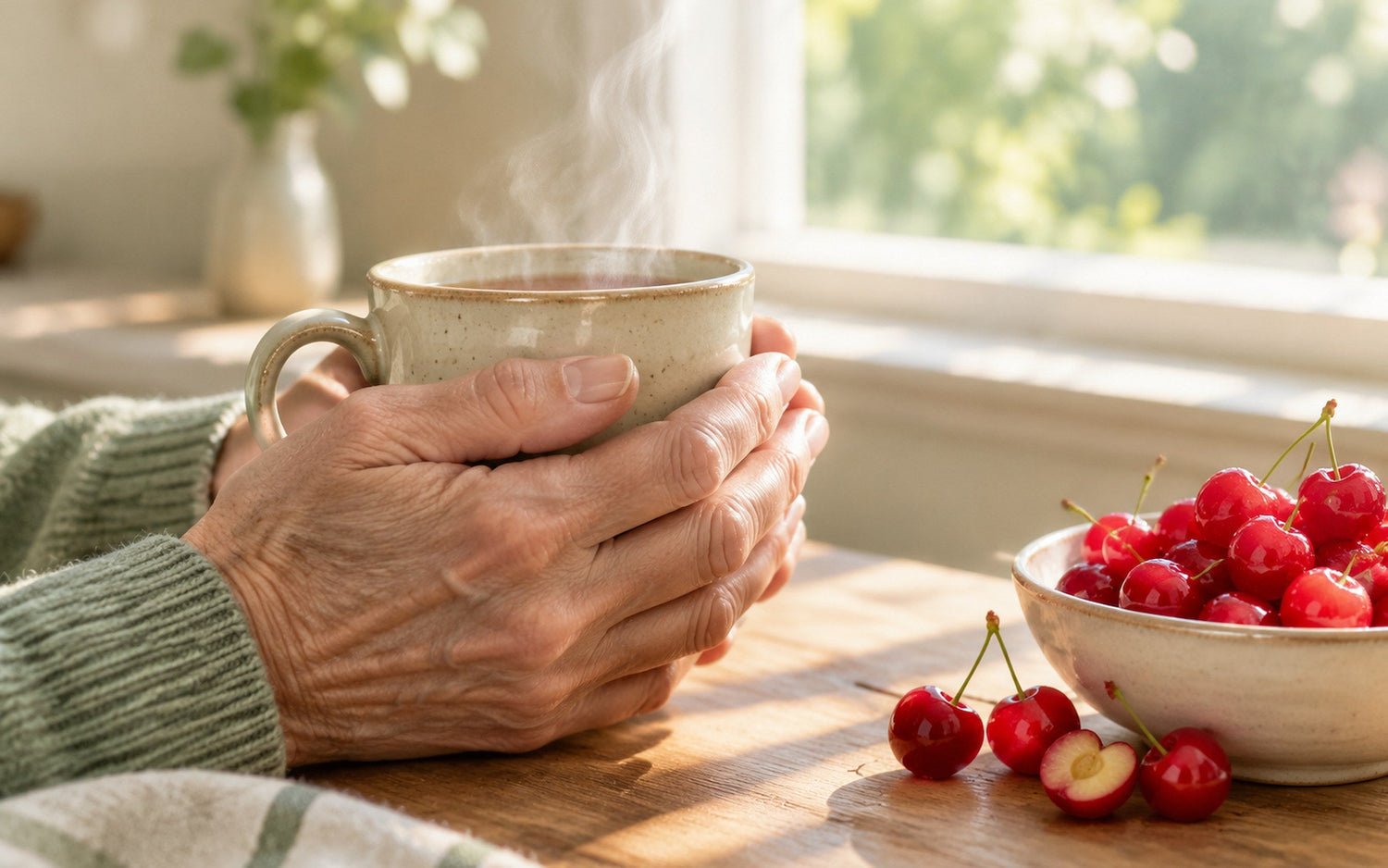
If your hands feel stiff and clumsy for the first half hour of the day, you are in good company. Morning stiffness in the hands is one of the most common complaints after 50. In most people it comes from osteoarthritis, the slow change in the cartilage and other tissues of the finger joints, and it usually loosens up within about 30 minutes of moving. Warm water, a few minutes of finger movement, regular exercise, a healthy weight and decent sleep are what most people lean on. Stiffness that lasts more than an hour, swelling in both hands at once, or a hot, red joint are reasons to see a doctor.
This article walks through what is going on inside the hand, why mornings are the worst, what people actually do about it, and the short list of warning signs that mean it is time to get checked.
Key studies at a glance
| Study | Who took part | What they took or did | How long | What the researchers found |
|---|---|---|---|---|
|
Østerås et al. 2017, Cochrane Database of Systematic Reviews PMID: 28141914 |
7 trials of people with hand osteoarthritis (5 trials, 381 people, pooled for pain) | Hand exercise programs vs no exercise | Varied by trial | Small benefits: pain down 0.5 points and finger stiffness down 0.7 points on a 0 to 10 scale. Low-quality evidence, gains not sustained at 6 to 12 months. |
|
Hennig et al. 2015, Annals of the Rheumatic Diseases PMID: 24667900 |
80 women with hand osteoarthritis, average age about 61 | Information plus home hand exercises vs information only | 3 months | Better everyday hand use, grip strength, joint pain and fatigue. 16 women in the exercise group met standard responder criteria vs 2 in the control group. |
|
Jäger et al. 2025, Journal of Dietary Supplements PMID: 41247121 |
10 healthy adults | 500 mg standardized tart cherry extract daily vs placebo (crossover) | 4 weeks | CRP, a blood marker of inflammation, fell from 5.91 to 4.56 mg/L (about 23 percent). Plasma urate also fell. Small trial, hands not measured. |
|
Chai et al. 2019, Nutrients PMID: 30678193 |
37 adults aged 65 to 80 | 480 mL tart cherry juice daily vs a control drink | 12 weeks | CRP lower than in the control group. In the juice group CRP was 25 percent below baseline. |
|
Schumacher et al. 2013, Osteoarthritis and Cartilage PMID: 23727631 |
58 adults with mild to moderate knee osteoarthritis | Two 8 oz bottles of tart cherry juice blend daily vs placebo (crossover) | 6 weeks per phase | Pain and function scores improved on cherry juice, but not significantly more than on placebo. hsCRP fell vs placebo. |
What morning stiffness in the hands feels like
You know the scene. The alarm goes, you reach for the phone, and your fingers do not close around it the way they should. They feel thick, as if you slept in gloves one size too small. The toothpaste cap takes two tries. By the time the coffee is finished, the hands mostly work again, and by mid-morning you have forgotten about it.
That pattern, worst on waking and better with use, is the signature of osteoarthritis in the hands. It is different from a hand that hurts all day, a hand that swells, or a finger that catches and clicks. Those point to other causes, and we will get to them.
Why hands are stiff in the morning
Osteoarthritis is the most common form of arthritis and it loves the hands, knees, hips and spine. The National Institute of Arthritis and Musculoskeletal and Skin Diseases describes it as a breakdown or change in the structure of the cartilage (the slippery cap on the ends of the bones) and other tissues inside the joint. One detail worth knowing: NIAMS says this is not simple wear and tear. Changes in the tissue trigger the breakdown, and it usually happens gradually over years.
Two things about osteoarthritis explain the morning problem. First, NIAMS lists joint stiffness that usually lasts less than 30 minutes, in the morning or after resting, as a core symptom. Second, Mayo Clinic notes that stiffness is most noticeable on waking or after being inactive. A joint that has not moved for seven or eight hours is stiffer than one in use. Once you start moving, the joint loosens.
In the hands specifically, NIAMS notes that bony enlargements and shape changes in the finger joints can develop over time. That is why many people after 50 notice knobby knuckles, a wider base of the thumb, or a finger that no longer sits quite straight. The risk goes up with age, extra body weight, a history of injury or surgery to the joint, repetitive use, and family history.
Other reasons hands are stiff, and how to tell them apart
Osteoarthritis is the usual suspect, but it is not the only one. Three others show up often enough to mention.
Rheumatoid arthritis. This is an autoimmune disease, where the immune system attacks the joint lining. NIAMS lists joint stiffness that lasts longer than 30 minutes after waking, swelling and warmth in the joint, difficulty making a fist or buttoning clothes, fatigue, and occasional low-grade fever. It is more common in the wrists, hands and feet, and it tends to show up on both sides of the body at once. If your morning stiffness drags past an hour and both hands are involved, that pattern deserves a doctor's attention, because rheumatoid arthritis is treated very differently from osteoarthritis.
Trigger finger. If one finger or your thumb catches, pops, or locks in a bent position and you need the other hand to straighten it, that is probably trigger finger, where the tendon cannot glide smoothly through its sheath. Cleveland Clinic says the stiffness and locking are usually worst first thing in the morning and ease as you use the hand. It is most common between 40 and 60, and diabetes, rheumatoid arthritis, osteoarthritis and gout all raise the risk.
Gout. Most people think of the big toe, and that is where it usually starts, but gout can also hit the fingers and wrists. The difference is drama: gout arrives suddenly, often overnight, and the joint is hot, red, swollen and too tender to touch. We cover that pattern in why your big toe hurts at night.
What people do about stiff hands in the morning
None of this is complicated, which is the good news. The people who do best tend to build a short routine and stick to it.
Warm water first. MedlinePlus lists warm baths, massage and stretching among the things that help joint pain, and Cleveland Clinic lists applying heat or cold to affected joints to relieve osteoarthritis pain and stiffness. In practice: run the tap warm, hold your hands under it for a minute, then work through a few movements. Open and close a fist ten times. Spread the fingers wide and relax them. Touch the thumb to each fingertip. Bend each finger at the middle knuckle as if making a hook. Two minutes, done.
The finger routine has research behind it, though the effects are modest. A 2017 Cochrane review of seven trials in people with hand osteoarthritis found that exercise reduced hand pain by about half a point and finger stiffness by 0.7 points on a 0 to 10 scale. The authors rated the evidence low quality, and the benefit was not sustained at 6 to 12 months, which is a good argument for keeping the routine going rather than trying it for a month. In a separate randomized trial, 80 women with hand osteoarthritis who did home hand exercises for 3 months improved grip strength, joint pain, fatigue and everyday hand tasks compared with women who only got information.
Cold for achy, swollen days. Heat is for stiffness. If a knuckle is puffy and sore after a day of gardening or typing, a cold pack wrapped in a towel for ten minutes tends to feel better.
Keep the hands moving through the day. Stiffness after rest is the whole problem, so long stretches of stillness make it worse. People who sit at a desk or in front of the TV for hours do well to open and close their hands every so often. A jar opener, a thicker pen grip, and lever-style handles instead of round knobs take load off sore joints and are cheap.
Exercise the rest of you. Cleveland Clinic says low-impact activity such as swimming, water aerobics and weight training can ease stiffness and strengthen the muscles around joints. The CDC recommends 150 minutes of moderate activity a week plus muscle-strengthening work on at least two days. A daily 30-minute walk covers most of that.
Mind your weight. It seems odd that body weight would matter to the hands, since you do not walk on them. But Mayo Clinic points out that fat tissue produces proteins that can cause harmful swelling in and around joints, not just the weight-bearing ones. Losing even a modest amount tends to help the whole body, hands included.
Protect your sleep. Poor sleep makes pain feel louder the next morning. The National Institute on Aging says older adults need the same seven to nine hours as everyone else, and suggests a regular schedule, a wind-down routine, no caffeine late in the day, and no screens in the bedroom. We pull all of this, plus food and water, together in 7 daily habits for joint comfort after 50.
Tart cherry as one option
A lot of people with stiff hands end up looking at tart cherry, so here is what the research actually says. Tart cherries are rich in anthocyanins, the pigment that makes the cherry red, and the studies have focused on inflammation markers, uric acid, sleep and muscle recovery, not on hand stiffness directly.
The most relevant trial is small. In a placebo-controlled crossover trial published in the Journal of Dietary Supplements, 10 healthy adults took a standardized tart cherry extract daily for 4 weeks. C-reactive protein, a blood marker of inflammation, fell from 5.91 to 4.56 mg/L on tart cherry (about 23 percent) and did not change on placebo. Plasma urate also dropped. Ten people is a pilot, not proof, and nobody measured their hands. But lower inflammation markers are the reason tart cherry keeps coming up in joint conversations, and the uric acid results are covered in tart cherry and uric acid: what the research says.
Two other trials are closer to the people reading this. In a 12-week trial of 37 adults aged 65 to 80, drinking 480 mL of tart cherry juice a day lowered CRP compared with a control drink. And in a placebo-controlled trial in osteoarthritis itself, 58 adults with mild to moderate knee osteoarthritis drank two 8 oz bottles of a tart cherry juice blend a day for 6 weeks. Their pain and function scores improved, but not by significantly more than on placebo, while hsCRP fell. Neither study looked at hands, and both used juice rather than capsules.
If you try it, give it the same four weeks the trial used, take it at the same time each day, and judge it by how your mornings feel.
When to see a doctor
Most morning stiffness is a nuisance, not an emergency. These are the exceptions. See a doctor if:
- Stiffness lasts longer than 30 minutes to an hour each morning, especially in both hands at once (a rheumatoid arthritis pattern).
- A joint is hot, red, swollen and very painful, particularly if it came on suddenly.
- You have a fever along with a hot, inflamed joint. Mayo Clinic says to seek care immediately, because this can be an infection.
- You cannot bend or straighten a finger, or it locks. Cleveland Clinic says trigger finger will not heal without treatment, and to go to the emergency room if you suddenly cannot move a digit.
- The pain started with an injury, a fall or a hard knock.
- MedlinePlus adds: joint pain that lasts more than several days, fever without flu-like symptoms, or losing about 10 pounds without trying.
Mayo Clinic's general rule for osteoarthritis is simple: if joint pain or stiffness does not go away, make an appointment. A diagnosis early on gives you more options.
Where Nature Heart fits
Nature Heart makes one product: Cold-Pressed Tart Cherry Extract in a two-piece vegetable capsule. Two capsules a day give 3,600 mg equivalent of Montmorency tart cherry, cold-pressed rather than heat-dried and standardized for anthocyanins. One ingredient, no fillers or flow agents, every batch third-party lab tested before it ships. In our October 2026 buyer survey, joint comfort was the main reason 57 percent of first-time buyers gave for trying it.
We will not tell you it will fix your mornings. The honest version is that tart cherry has encouraging but small studies behind it, and it works best as one habit inside a routine of warm water, movement, sleep and sensible eating. If you want to test it, a bottle is 30 days and there is a 90-day money-back guarantee, which is long enough to find out whether the jar lid gets easier.
Frequently Asked Questions
Why are my hands so stiff when I wake up?
The most common reason after 50 is osteoarthritis in the finger joints, where the cartilage and other tissues in the joint change over time. A joint that has sat still for seven or eight hours is stiffer than one in use, so mornings are the worst. This kind of stiffness usually eases within about 30 minutes of moving.
How long should morning stiffness last?
With osteoarthritis, the National Institute of Arthritis and Musculoskeletal and Skin Diseases describes morning stiffness that usually lasts less than 30 minutes. Stiffness that lasts longer than 30 minutes, especially in both hands at once, is one of the signs of rheumatoid arthritis and is worth a doctor's visit.
Does warm water really help stiff hands?
Many people find it does. Cleveland Clinic lists applying heat or cold to affected joints as a way to relieve osteoarthritis pain and stiffness, and MedlinePlus mentions warm baths, massage and stretching for joint pain. Running warm water over your hands and then moving every finger is a simple two-minute routine.
Can tart cherry help with stiff hands?
No trial has looked at tart cherry and morning hand stiffness specifically. In a small placebo-controlled trial, 10 healthy adults who took a standardized tart cherry extract for 4 weeks had lower C-reactive protein, a blood marker of inflammation, and lower uric acid than on placebo. That is encouraging but it is a small study, so treat tart cherry as one option alongside movement, weight, sleep and diet.
When should I see a doctor about stiff hands?
See a doctor if the stiffness lasts more than an hour each morning, if both hands swell at the same time, if a joint is hot, red and very painful, if you have a fever, if you cannot straighten or bend a finger, or if the pain follows an injury. MedlinePlus also lists joint pain that lasts more than several days and unexplained weight loss as reasons to call.
What studies have been done on exercise for stiff hands?
A 2017 Cochrane review of seven trials found small benefits of hand exercise for people with hand osteoarthritis. In five trials with 381 people, pain fell by about 0.5 points and finger stiffness by 0.7 points on a 0 to 10 scale, though the evidence was rated low quality and the gains were not sustained at 6 to 12 months. In a 3-month trial of 80 women, home hand exercises improved grip strength, joint pain and fatigue compared with information alone.
Sources
- National Institute of Arthritis and Musculoskeletal and Skin Diseases (2025). Osteoarthritis Symptoms, Causes & Risk Factors. https://www.niams.nih.gov/health-topics/osteoarthritis
- National Institute of Arthritis and Musculoskeletal and Skin Diseases (2025). Rheumatoid Arthritis Symptoms, Causes, & Risk Factors. https://www.niams.nih.gov/health-topics/rheumatoid-arthritis
- Mayo Clinic (2025). Osteoarthritis: Symptoms and causes. https://www.mayoclinic.org/diseases-conditions/osteoarthritis/symptoms-causes/syc-20351925
- Cleveland Clinic (2026). Trigger Finger: What It Is, Symptoms, Causes & Treatments. https://my.clevelandclinic.org/health/diseases/7080-trigger-finger
- Cleveland Clinic. Osteoarthritis: What It Is, Symptoms & Treatment. https://my.clevelandclinic.org/health/diseases/5599-osteoarthritis
- MedlinePlus (2024). Joint pain. https://medlineplus.gov/ency/article/003261.htm
- Centers for Disease Control and Prevention (2023). Adult Activity: An Overview. https://www.cdc.gov/physical-activity-basics/guidelines/adults.html
- National Institute on Aging (2025). Sleep and Older Adults. https://www.nia.nih.gov/health/sleep/sleep-and-older-adults
- Jäger R, Purpura M, Balcombe ST, Godavarthi A, Reddy SA, Vasenina E, Tinsley GM (2025). Effects of Tart Cherry Extract Supplementation on Plasma Urate and C-Reactive Protein Levels in Healthy Adults: a Randomized Controlled Trial. J Diet Suppl. PMID: 41247121. https://www.tandfonline.com/doi/full/10.1080/19390211.2025.2589787
- Østerås N, Kjeken I, Smedslund G, Moe RH, Slatkowsky-Christensen B, Uhlig T, Hagen KB (2017). Exercise for hand osteoarthritis. Cochrane Database of Systematic Reviews. PMID: 28141914. https://pubmed.ncbi.nlm.nih.gov/28141914/
- Hennig T, Hæhre L, Hornburg VT, Mowinckel P, Norli ES, Kjeken I (2015). Effect of home-based hand exercises in women with hand osteoarthritis: a randomised controlled trial. Annals of the Rheumatic Diseases. PMID: 24667900. https://pubmed.ncbi.nlm.nih.gov/24667900/
- Schumacher HR, Pullman-Mooar S, Gupta SR, Dinnella JE, Kim R, McHugh MP (2013). Randomized double-blind crossover study of the efficacy of a tart cherry juice blend in treatment of osteoarthritis (OA) of the knee. Osteoarthritis and Cartilage. PMID: 23727631. https://pubmed.ncbi.nlm.nih.gov/23727631/
- Chai SC, Davis K, Zhang Z, Zha L, Kirschner KF (2019). Effects of Tart Cherry Juice on Biomarkers of Inflammation and Oxidative Stress in Older Adults. Nutrients. PMID: 30678193. https://pubmed.ncbi.nlm.nih.gov/30678193/